![OpTechDarkRMM[80]](https://optech.tech/wp-content/uploads/2026/05/OpTechDarkRMM80.png)
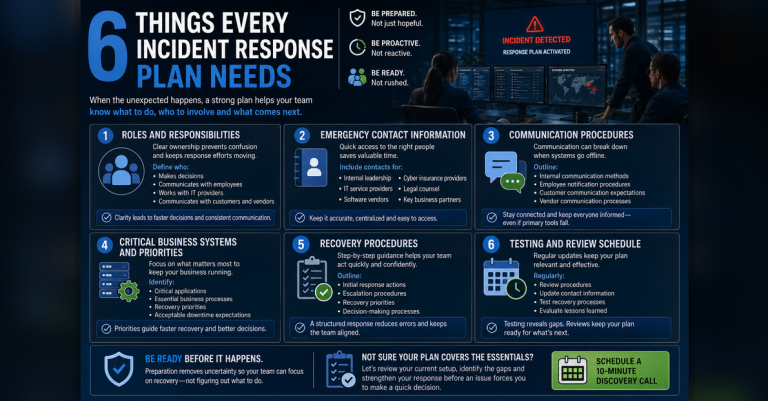
6 Essential Elements Every Incident Response Plan Must Have
In today’s digital-first world, organizations face an ever-growing array of cybersecurity threats. From sophisticated ransomware to insider data breaches, the risks are both persistent and evolving. The difference between a minor hiccup and a catastrophic loss often lies in how quickly and effectively a company can detect, contain, and respond to security incidents. That’s why having a robust incident response plan is not just a best practice—it’s an absolute necessity.
But what separates a truly effective incident response plan from one that’s little more than a paper exercise? It’s the thoughtful inclusion of several key elements that prepare your team, streamline your response, and minimize potential damage. Let’s explore the six essential elements every incident response plan must have, ensuring your organization can stand resilient in the face of cyber adversity.
1. Clear Incident Response Policy and Defined Objectives
Every successful incident response plan starts with a well-articulated policy that establishes the organization’s commitment to security and the overarching goals of the response effort. This policy serves as the foundation, providing direction and authority to the entire incident response team.
- Purpose and Scope: Define what constitutes a security incident in your organization. Is it only cyber attacks, or does it include insider threats, physical breaches, and data leaks? A broad, clearly outlined scope ensures nothing falls through the cracks.
- Roles and Responsibilities: Assign clear ownership for incident detection, escalation, communication, and resolution. Specify who leads the team, who manages communications, and who handles technical analysis. This eliminates confusion when every second counts.
- Objectives: Articulate the primary aims of your plan—protecting sensitive data, minimizing downtime, preserving evidence, and maintaining operational continuity. These objectives guide your team’s priorities when responding to real incidents.
A robust policy acts as the compass for your security efforts, ensuring that every action taken during a crisis aligns with your organization’s values, compliance obligations, and business goals.
2. Comprehensive Preparation and Team Readiness
Preparation is the bedrock of incident response. It’s not enough to have a plan on paper; your people, processes, and technology must be ready to spring into action at a moment’s notice.
- Incident Response Team (IRT): Assemble a multidisciplinary team that includes IT, security, communications, legal, human resources, and executive leadership. Ensure everyone understands their roles and the chain of command.
- Training and Drills: Conduct regular tabletop exercises and simulations to test your plan. These should mimic real-world attack scenarios and require team members to practice their responses under pressure.
- Communication Protocols: Establish secure, reliable channels for internal and external communications. Prepare templates for incident notifications and press releases. Identify key contacts for law enforcement, cybersecurity consultants, and regulatory bodies.
- Inventory of Assets: Maintain an up-to-date inventory of critical systems, data, and network assets. This helps responders prioritize protection and recovery efforts.
- Access Controls and Tools: Ensure the team has immediate access to forensic tools, backup systems, and incident tracking platforms. Pre-configured access saves invaluable minutes during a crisis.
Preparation doesn’t just reduce chaos—it builds confidence. When your team knows what to do and has the tools they need, they can act swiftly and decisively.
3. Robust Detection and Analysis Framework
Time is a critical factor in mitigating the impact of a security incident. The sooner you detect a threat, the more effectively you can contain it. An effective incident response plan must include mechanisms for rapid identification and thorough analysis.
- Monitoring Systems: Deploy advanced monitoring solutions, such as security information and event management (SIEM) platforms, intrusion detection systems (IDS), and endpoint detection and response (EDR) tools. These help surface suspicious activity in real-time.
- Alert Triage: Establish processes for filtering and prioritizing alerts. Not every anomaly warrants a full-scale response, so clear criteria help prevent alert fatigue and ensure the team focuses on genuine threats.
- Incident Classification: Develop a taxonomy for categorizing incidents by type and severity. This allows for tailored responses and more accurate reporting.
- Forensic Analysis: Empower your team to collect and examine digital evidence without contaminating it. This is crucial for understanding the attack vector, identifying compromised systems, and supporting legal or compliance investigations.
Detection and analysis are the eyes and ears of your incident response capability. With the right tools and workflows, you can spot trouble before it spirals out of control.
4. Effective Containment, Eradication, and Recovery Protocols
Once a threat is detected, rapid containment is essential to prevent it from spreading. Afterward, your focus must shift to thoroughly eradicating the threat and restoring normal operations.
- Containment Strategies: Define immediate and long-term containment measures. Short-term actions might include isolating affected devices or shutting down compromised accounts. Long-term containment involves patching vulnerabilities and tightening access controls.
- Eradication Procedures: Detail the steps required to remove malicious code, unauthorized users, or compromised components from your environment. This may involve re-imaging devices, updating software, and resetting credentials.
- Recovery Plans: Create step-by-step guides for restoring systems from clean backups, validating data integrity, and gradually reintroducing affected assets back into the network. Prioritize critical business functions to minimize downtime.
- Validation and Monitoring: After recovery, continuously monitor systems for signs of reinfection or residual threats. Verification is essential before declaring the incident resolved.
Containment, eradication, and recovery are where your plan meets the real world. Clear, actionable protocols empower your team to act without hesitation, reducing the risk of lasting damage.
5. Timely Communication and Stakeholder Notification
Communication can make or break your response efforts. A successful incident response plan includes detailed guidelines for informing all relevant stakeholders—both inside and outside the organization.
- Internal Communication: Keep executives, IT teams, and affected business units informed throughout the incident lifecycle. Transparency builds trust and ensures coordinated action.
- External Notification: Notify customers, partners, and regulators as required by law or contractual obligation. Timing and accuracy are critical to maintaining credibility and avoiding legal penalties.
- Media Relations: Prepare spokespersons and draft press statements in advance. A clear, unified message helps manage public perception and mitigates reputational harm.
- Documentation: Record all communications for audit purposes and future reference. Detailed logs support compliance and facilitate post-incident reviews.
During a crisis, misinformation spreads easily. Proactive, transparent communication reassures stakeholders, limits speculation, and helps contain potential fallout.
6. Post-Incident Analysis and Continuous Improvement
No incident response plan is complete without a mechanism for learning and growth. After the dust settles, a structured review process ensures your organization emerges stronger and better prepared for future challenges.
- Incident Debrief: Gather the incident response team and key stakeholders to discuss what happened, what worked, and what could be improved. Encourage honest feedback and constructive criticism.
- Root Cause Analysis: Dig deep to identify the underlying causes of the incident. Was it a technical vulnerability, a lapse in procedure, or a human error? Understanding the root cause enables targeted remediation.
- Lessons Learned: Document insights, successes, and failures. Update your incident response plan, technical controls, and training programs based on these findings.
- Reporting: Prepare detailed reports for executives, board members, and regulators. Transparent reporting demonstrates accountability and fosters a culture of continuous improvement.
- Ongoing Training: Incorporate lessons learned into regular training sessions and future simulations. This keeps your team sharp and your defenses agile.
Post-incident analysis transforms adversity into opportunity. By systematically reviewing each response, you create a feedback loop that drives organizational resilience and maturity.
Conclusion
A comprehensive incident response plan is more than a checklist—it’s a living document that galvanizes your organization’s defense against the unpredictable threats of the digital age. By embedding these six essential elements—clear policies, thorough preparation, effective detection, decisive containment, proactive communication, and a commitment to continuous improvement—you lay the groundwork for rapid response, minimized damage, and sustained trust.
Cybersecurity threats will never disappear, but with a well-crafted incident response plan, your organization can face them head-on, emerging stronger and more secure every time. Is your plan up to the challenge?