![OpTechDarkRMM[80]](https://optech.tech/wp-content/uploads/2026/05/OpTechDarkRMM80.png)
The Hidden Costs of Downtime Beyond Financial Loss
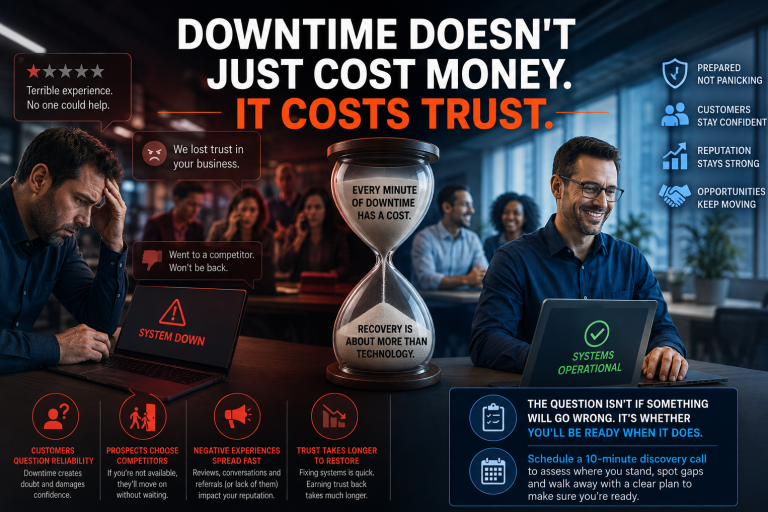
When a business experiences downtime, the immediate focus often falls on the evident financial losses—missed sales, disrupted operations, and the tangible costs of repairing broken systems. However, the true impact stretches far deeper than balance sheets and profit margins. Downtime inflicts hidden costs that silently erode a company’s most valuable assets: customer trust and brand reputation.
Trust, once shaken, is not easily restored. Clients and partners expect seamless reliability in their interactions. When systems go offline, even briefly, customers begin to question your organization’s dependability. This skepticism can lead to lost loyalty, as clients may seek competitors who promise greater stability. The damage is compounded in today’s digital landscape, where word travels fast and negative experiences are broadcast instantly across social platforms, review sites, and industry forums.
Reputational Damage: The Ripple Effect
- Negative Public Perception: Headlines about outages can linger, shaping public perception and casting doubt on your business’s professionalism.
- Decreased Customer Confidence: Clients may hesitate to make future purchases or renew contracts, fearing repeated disruptions.
- Internal Morale: Employees, too, may feel the strain, affecting productivity and pride in their workplace.
These hidden repercussions often outweigh the initial monetary loss, making proactive downtime prevention not just a technical concern, but a strategic imperative. Recognizing and addressing these costs is essential for safeguarding both your company’s reputation and its long-term success.
How Customer Confidence is Shaken During Disruptions
Every moment of downtime ripples far beyond lost revenue—it directly undermines customer confidence, shaking the very foundation of trust that businesses work tirelessly to build. When customers encounter a disruption, whether it’s a website outage, delayed service, or any lapse in reliability, their first reaction is often frustration. This emotional response quickly evolves into skepticism about the company’s competence and commitment to service excellence.
Trust is fragile, and digital consumers have little patience for uncertainty. Disruptions prompt customers to question the reliability of a brand, especially if timely communication is lacking or the issue recurs. The expectation for seamless, always-on service has never been higher; even brief interruptions can lead to doubts about whether a business has invested sufficiently in technology and customer support. In competitive markets, these moments of uncertainty can be decisive. Customers are empowered to switch providers with just a few clicks, and many will do so if their confidence in a company’s stability is compromised.
Long-Term Impact on Brand Perception
- Negative Word-of-Mouth: Disgruntled customers often share their experiences both online and offline, amplifying reputational damage.
- Perceived Reliability: Persistent or poorly handled disruptions can cement a reputation for unreliability, deterring new business.
- Erosion of Loyalty: Each instance of downtime chips away at loyalty, making it difficult to retain even long-standing clients.
Ultimately, every disruption is a test of a company’s ability to uphold its promises. How a business responds determines whether confidence is restored—or irreparably shaken, influencing both immediate satisfaction and long-term reputation.
Lost Opportunities When Prospects Turn Elsewhere
When a business experiences downtime, the most immediate consequence may appear to be financial loss. However, the true cost runs much deeper, especially when potential clients encounter inaccessible services or unresponsive platforms. In today’s fast-paced digital landscape, prospects demand instant access, seamless transactions, and real-time communication. If your systems are offline, even briefly, you risk much more than just temporary inconvenience—you risk losing valuable opportunities as prospects seek alternatives.
The High Cost of Missed First Impressions
First impressions are formed in seconds. If a prospect visits your website or attempts to contact your company during a period of downtime, the result is a missed opportunity to showcase your offerings and establish credibility. These lost moments can be critical, as users are unlikely to wait for your systems to recover. Instead, they turn to competitors who can immediately meet their needs, potentially forming lasting relationships elsewhere. This shift not only leads to lost sales but also diminishes your business’s perceived reliability.
The Ripple Effect on Business Growth
- Lost referrals: Prospects who have negative experiences are less likely to recommend your services to others, compounding the impact of a single incident.
- Diminished pipeline: Consistent downtime can erode your pipeline, as fewer new leads are captured and nurtured.
- Brand erosion: In a market where trust is currency, repeated outages can tarnish your brand, making it harder to attract new prospects in the future.
Every instance where a prospect turns elsewhere represents not only an immediate loss but also a missed chance to grow your reputation and market share. As we consider the broader impacts of downtime, it’s clear that lost opportunities can have far-reaching and lasting consequences.
The Amplifying Effect of Negative Experiences and Reviews
In today’s hyperconnected world, a single moment of downtime can have consequences that extend far beyond immediate financial losses. Customers expect seamless, uninterrupted service, and when these expectations aren’t met, frustration quickly mounts. More critically, dissatisfied customers rarely keep their experiences to themselves. Instead, negative encounters are often broadcasted widely—via social media, online review platforms, and word of mouth—amplifying the original issue and multiplying its impact.
Even a brief service interruption can trigger a cascade of negative reviews. These reviews linger online, shaping perceptions long after the technical issue has been resolved. Potential clients, performing due diligence before committing to a business, rarely distinguish between isolated incidents and systemic failures. A handful of poor reviews, especially those highlighting reliability concerns, can erode hard-earned trust and raise red flags for future prospects.
The Ripple Effect of Public Criticism
- Loss of Credibility: Each negative review chips away at a company’s credibility, making it harder to win back both existing and potential customers.
- Viral Spread: Social media accelerates the spread of complaints, allowing a single negative experience to reach thousands within minutes.
- Influence on Purchasing Decisions: Studies show that even one negative review can deter a significant percentage of potential buyers, directly impacting revenue and growth.
The amplifying effect of negative experiences makes it clear: downtime damages more than just the bottom line. It undermines trust, tarnishes reputation, and makes recovery significantly more challenging, setting the stage for a deeper examination of reputational risk in the digital age.
Why Regaining Trust Takes Longer Than Restoring Systems
When a business experiences downtime, the immediate impulse is to rally IT teams and restore technical operations as swiftly as possible. While system recovery can often be measured in hours or days, the process of regaining customer trust is far more complex and prolonged. The stark reality is that trust, once fractured, is not as easily rebooted as a server or restored from a backup; it demands a sustained and deliberate effort to rebuild.
The Ripple Effect of Broken Trust
Every minute of downtime chips away at the confidence clients and partners place in an organization. Customers expect reliability, and when systems fail, they begin to question not only the security of their data but also the competence and transparency of the business itself. This skepticism lingers well after technical issues have been resolved, leaving a lingering sense of vulnerability and doubt.
Restoration vs. Reassurance
While system restoration is largely a technical challenge, regaining trust is a human one. It requires open communication, visible accountability, and ongoing reassurance. Companies need to demonstrate that they have learned from the incident, implemented stronger safeguards, and are committed to preventing future outages. This means regular updates, transparency about causes and fixes, and a willingness to listen and respond to customer concerns.
- Technical fixes are immediate; trust-building is ongoing.
- Downtime is a temporary inconvenience; damaged reputations can have lasting consequences.
- Communication is key: proactive engagement accelerates the trust recovery process.
Ultimately, while systems may be back online within hours, the path to regaining trust stretches much longer, requiring patience, integrity, and continuous effort from every level of the organization.