![OpTechDarkRMM[80]](https://optech.tech/wp-content/uploads/2026/05/OpTechDarkRMM80.png)
Understanding the Limits of AI Monitoring
Artificial intelligence has revolutionized how organizations monitor their IT systems, offering unprecedented capabilities in anomaly detection, predictive maintenance, and real-time alerting. However, it’s critical to recognize that even the most advanced AI monitoring tools come with inherent limitations. Understanding these constraints ensures that businesses maintain a realistic perspective on what AI can—and cannot—do when it comes to safeguarding system uptime.
AI’s Dependency on Data
AI monitoring systems thrive on historical and real-time data. Their effectiveness is directly tied to the quality, quantity, and diversity of the data they analyze. In situations where past data is incomplete, biased, or fails to reflect rare edge-case scenarios, AI tools may struggle to recognize new types of failures or subtle system degradations. This dependency means that unexpected or unprecedented issues can slip through undetected, potentially causing significant disruption before human intervention takes place.
Contextual and Human Factors
While AI excels at pattern recognition, it often lacks the broader context that human operators possess. For example, an AI may not understand the business impact of a minor anomaly during a critical sales event or recognize the nuances of system behavior under unique operational conditions. Human expertise remains essential in interpreting AI alerts, prioritizing responses, and making judgment calls that consider the organization’s strategic priorities.
Ultimately, while AI monitoring is a powerful ally, it is not infallible. Recognizing its limits helps organizations prepare for inevitable system failures and underscores the importance of robust recovery strategies alongside automated oversight.
Why Early Detection Does Not Equal Rapid Recovery
In the age of advanced monitoring tools and artificial intelligence, organizations often believe that early detection of system failures guarantees a swift return to normal operations. However, this assumption overlooks the complex realities of IT infrastructure and the multifaceted nature of recovery. Early detection is undoubtedly valuable—it alerts teams to issues before they escalate, minimizing damage and providing a head start in troubleshooting. Yet, the path from identifying a problem to fully restoring service is rarely straightforward.
One critical reason early detection does not ensure rapid recovery lies in the intricate web of dependencies within modern systems. Even with real-time alerts, the underlying causes can be deeply embedded, requiring in-depth analysis, cross-team collaboration, and sometimes even manual intervention. Automated tools may flag performance anomalies or security breaches, but they cannot always pinpoint the root cause or resolve the broader impacts on interconnected services. Recovery, therefore, demands more than awareness—it requires actionable insight, technical expertise, and a coordinated response plan.
Barriers Between Detection and Resolution
- Complex Root Causes: Issues may originate from obscure software bugs, hardware failures, or third-party integrations, which automated alerts alone cannot resolve.
- Resource Constraints: Human intervention is often required, and the availability of skilled personnel can delay resolution, especially during off-hours or peak demand.
- Change Management: Implementing fixes safely in live environments requires careful planning, testing, and communication to avoid unintended consequences.
Ultimately, while early detection is a crucial first step, it must be paired with robust recovery strategies to minimize downtime and business impact. This distinction highlights the ongoing importance of investing in both proactive monitoring and resilient recovery processes.
The Fire Alarm Analogy and What It Teaches Us
Imagine your organization’s digital infrastructure as a sprawling building filled with valuable assets, bustling activity, and intricate systems humming in perfect coordination. Now, picture a fire alarm mounted on the wall—a device designed to detect danger and sound the alert when something goes wrong. No matter how advanced, a fire alarm itself cannot extinguish flames or repair the damage that follows a blaze. Its role is to notify you of trouble, not to resolve it. This simple analogy provides a powerful lens through which to understand the limitations of artificial intelligence in system failure scenarios.
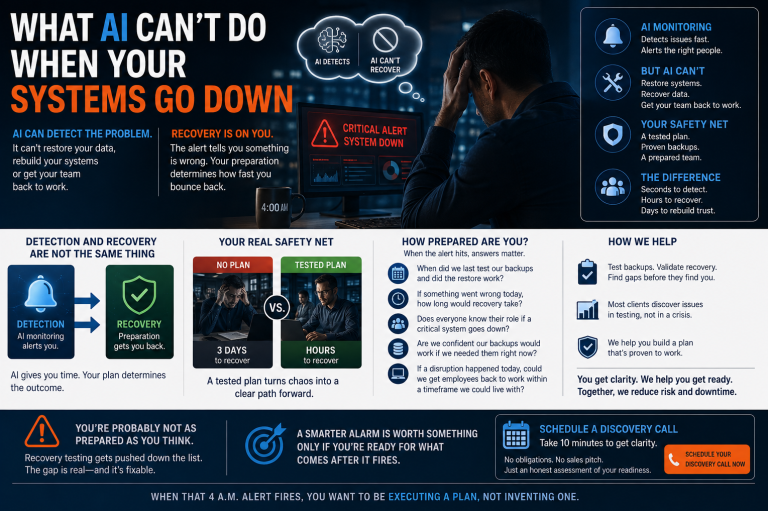
AI-powered monitoring tools are remarkably adept at detecting anomalies, predicting failures, and issuing alerts faster than any human ever could. They can parse mountains of data, recognize subtle warning signs, and swiftly communicate that a problem is unfolding. However, just like the fire alarm, AI’s capability largely stops at detection. It cannot single-handedly restore lost data, rebuild corrupted systems, or undo the consequences of a catastrophic event. The real challenge begins after the alarm sounds—when the focus shifts from identification to recovery.
Key Lessons from the Analogy
- Detection vs. Resolution: AI excels at identifying threats but cannot fully remediate the aftermath.
- The Human Factor: Expertise, decisive action, and a robust recovery plan remain indispensable when disaster strikes.
- Preparedness Counts: Just as fire drills and extinguishers are vital, so too are backup strategies and recovery protocols in digital environments.
This analogy underscores why prioritizing recovery capabilities alongside AI-powered detection is essential for true resilience. Recognizing the distinction prepares organizations to respond swiftly and effectively when the inevitable alarm is triggered, ensuring business continuity and minimizing lasting damage.
Consequences of Delayed Recovery After an Alert
When a critical alert signals trouble within your IT infrastructure, the clock immediately starts ticking. Every moment that passes without prompt recovery amplifies the risks and repercussions. Delayed response not only undermines operational continuity but can also cascade into severe, long-lasting consequences for your business.
One of the most immediate effects of delayed recovery is prolonged service downtime. For organizations reliant on digital platforms, even a minor outage can disrupt business transactions, stall customer engagement, and erode trust. The longer systems remain unavailable, the greater the potential for lost revenue and diminished brand reputation. In industries such as finance or healthcare, where uptime is paramount, these losses can be catastrophic, exposing organizations to regulatory penalties and legal liabilities.
Operational and Security Risks
- Data Integrity Compromised: Extended system failures increase the risk of data corruption or loss, leading to challenges in restoring accurate records and maintaining system reliability.
- Security Vulnerabilities: Unaddressed alerts can open doors to cyber threats. Attackers often exploit windows of vulnerability when systems are down or inadequately monitored, heightening the risk of breaches and data theft.
- Staff Productivity Impacted: Teams become mired in firefighting mode, diverting resources from strategic initiatives to emergency recovery efforts.
Ultimately, delayed recovery after an alert can ripple throughout the organization, damaging customer satisfaction, weakening competitive advantage, and inflating remediation costs. Swift, effective response is not just an IT priority—it is a business imperative that underpins resilience and long-term success.
Building a Real Safety Net Beyond AI Tools
Reliance on artificial intelligence has become the norm for countless organizations aiming to streamline operations, accelerate decision-making, and improve overall efficiency. Yet, as advanced as AI-driven solutions have become, they cannot replace the fundamentals of a comprehensive safety net—one that anticipates, absorbs, and responds to systemic failures with resilience. Recognizing the limits of AI is the first step toward building robust safeguards that genuinely protect business continuity.
While AI excels at automating tasks, identifying patterns, and even flagging anomalies, it remains inherently reactive. When critical systems collapse unexpectedly—due to cyberattacks, hardware malfunctions, or unforeseen external events—AI tools may falter, especially if the data streams or infrastructure they depend upon are compromised. This is where a real safety net, thoughtfully architected by human expertise, becomes indispensable.
The Pillars of a True Safety Net
- Human Oversight: Trained professionals are essential to interpret, validate, and override automated responses, ensuring nuanced decision-making during crises.
- Redundant Systems: Backup infrastructure, failover protocols, and alternative communication channels provide continuity when primary systems fail, minimizing downtime and loss.
- Comprehensive Recovery Plans: Proactive strategies, regular drills, and clear documentation empower teams to respond swiftly and effectively, independent of AI assistance.
Ultimately, building a safety net that extends beyond AI tools is not about dismissing technology but about fortifying it with human judgment, foresight, and preparation. This layered approach ensures that when systems falter, organizations are equipped not just to react—but to recover and thrive.