![OpTechDarkRMM[80]](https://optech.tech/wp-content/uploads/2026/05/OpTechDarkRMM80.png)
Understanding the False Sense of Security with Untested Backups
Many organizations invest heavily in robust backup solutions, believing this alone is enough to safeguard their valuable data. However, relying on untested backup and recovery plans creates a deceptive veil of security. Leaders and IT teams may assume that, simply because backups exist, they are fully protected against potential data loss, cyberattacks, or system failures. This confidence, while comforting, can be dangerously misplaced if the recovery process has never been put to the test in real-world conditions.
The illusion of safety stems from the assumption that backup systems will function flawlessly when disaster strikes. Yet, without regular testing, there is no guarantee these backups are current, complete, or even accessible. Unexpected issues—such as corrupted files, incomplete backups, or incompatible formats—can easily go unnoticed until an emergency reveals them. In such moments, discovering that critical data cannot be restored quickly or accurately can lead to severe operational disruptions, financial losses, and reputational damage.
Key Risks of Untested Backup Plans
- Data Corruption: Backups may contain errors or corrupted files, rendering them useless when restoration is needed most.
- Obsolete Data: Backups that are not updated regularly may fail to reflect recent changes, leading to significant data gaps.
- Operational Delays: Unfamiliarity with the recovery process can cause panic and costly downtime during a crisis.
Recognizing this false sense of security is the first step toward building a truly resilient data protection strategy—one that demands routine testing and validation of every backup and recovery process.
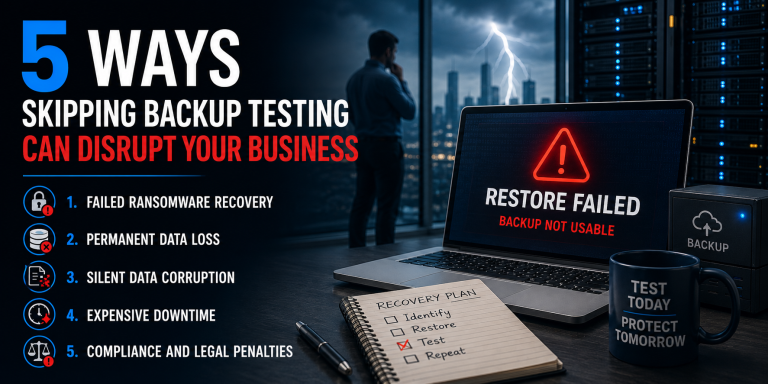
How Failed Ransomware Recovery Can Cripple Your Business
Ransomware attacks have become one of the most formidable threats facing modern organizations. When a company’s data is encrypted and access is denied, the ability to recover swiftly hinges on a well-tested backup and recovery plan. Unfortunately, many businesses discover the hidden dangers of untested plans only after an attack has struck, often with devastating consequences.
A failed ransomware recovery does more than temporarily halt operations—it can cripple your business on multiple levels. The immediate impact is operational paralysis. Employees are locked out of critical systems and applications, leading to missed deadlines, halted production lines, and a standstill in customer service. For industries like healthcare or finance, the inability to access essential data can have life-altering consequences for clients and regulatory repercussions for the organization.
Long-Term Repercussions
- Financial Loss: Extended downtime incurs steep costs, including lost revenue, potential ransom payments, and expenses related to IT remediation.
- Reputational Damage: Customers and partners lose confidence in a business that cannot safeguard its data, resulting in lost contracts and diminished trust.
- Legal and Regulatory Penalties: Failure to restore data promptly can lead to breaches of compliance, exposing businesses to fines and lawsuits.
Ultimately, without a reliable, tested backup and recovery strategy, a single ransomware incident can escalate from a technical issue to an existential threat. Proactive preparation is the cornerstone of resilience—ensuring your business can withstand and recover from even the most determined cybercriminal attacks.
The Risk of Permanent Data Loss Without Backup Testing
Many organizations invest heavily in backup systems, believing that simply having a backup equates to data security. However, a critical—and often overlooked—component of a robust data protection strategy is regularly testing backup and recovery plans. Without comprehensive testing, businesses are exposed to the very real risk of permanent data loss, regardless of their backup investments.
Unverified backups provide a dangerous illusion of safety. Hardware failures, software corruption, and incomplete backups can all render recovery efforts futile if not identified through routine testing. Imagine discovering, during a crisis, that your backup files are unusable due to corruption, missing data, or compatibility issues. The consequences are often dire: loss of sensitive information, prolonged downtime, and significant financial repercussions.
Common Causes of Backup Failure
- Hardware Malfunctions: Storage devices can fail unexpectedly, making data retrieval impossible if backups aren’t regularly validated.
- Human Error: Misconfigurations or overlooked files may result in incomplete backups, leaving critical data unprotected.
- Software Incompatibility: Upgrades or changes in software environments can render old backup files unreadable.
Ultimately, the only way to ensure data can be successfully restored is to conduct frequent and thorough backup tests. This proactive approach transforms backup plans from a theoretical safeguard into a practical, reliable defense against data loss, setting the foundation for the next step: understanding the potential business impacts of untested recovery strategies.
Silent Data Corruption and Its Impact on Business Continuity
Silent data corruption is an insidious threat that often lurks undetected within an organization’s digital infrastructure. Unlike more overt failures that immediately trigger alarms, this subtle form of data degradation can quietly undermine the integrity of mission-critical files, databases, and system backups. Over time, silent corruption may alter or erase vital bits of information without leaving any obvious trace, making it particularly dangerous for businesses that rely on untested backup and recovery plans.
When backup solutions are not rigorously tested, there’s a heightened risk that corrupted data will be inadvertently preserved and propagated across redundant systems. This means that, in the event of a disaster or system failure, organizations may attempt to restore from compromised backups—unaware that the data they depend on has already been tainted. As a result, recovery efforts can fail spectacularly at the precise moment when reliable data access is most critical, jeopardizing business continuity and operational resilience.
Consequences of Overlooked Data Corruption
- Extended Downtime: Recovery from backups containing silent corruption can prolong outages, as IT teams scramble to locate unaffected data sources.
- Regulatory and Compliance Risks: Loss or alteration of sensitive information could result in non-compliance with data protection laws, exposing the business to legal penalties.
- Reputation Damage: Clients and stakeholders may lose confidence in an organization that fails to safeguard essential data assets.
To minimize these risks, it is imperative to implement regular, comprehensive testing of backup and recovery processes—ensuring that silent data corruption is detected and addressed before it disrupts business operations.
The High Cost of Downtime from Unprepared Recovery Processes
In today’s fast-paced digital landscape, the repercussions of unplanned downtime can be both immediate and devastating. When organizations rely on backup and recovery plans that remain untested, they invite a host of operational and financial risks. The high cost of downtime is not merely a theoretical concern—it is a harsh reality that can cripple business operations, erode customer trust, and inflict significant financial losses.
Financial Impact
Every minute of unplanned downtime translates directly into lost revenue. For many businesses, even a brief interruption can disrupt sales, halt production, and delay critical services. The costs quickly add up: missed transactions, unfulfilled orders, and compensation for dissatisfied clients can all take a substantial toll. In industries such as finance, healthcare, or e-commerce, where uptime is synonymous with reliability, the stakes are even higher. A single data recovery mishap or slow restoration process can result in penalties, regulatory scrutiny, and irreparable reputational damage.
Operational Disruption and Productivity Loss
Beyond the immediate financial hit, downtime caused by unprepared recovery processes undermines employee productivity and business continuity. Teams are left scrambling to restore access, applications remain offline, and critical data may be temporarily or permanently inaccessible. The resulting chaos not only delays projects but also saps morale and increases the risk of human error as staff attempt makeshift solutions.
Ultimately, the cost of downtime from untested recovery strategies far outweighs the investment in thorough backup validation. Proactive testing and preparedness are essential for ensuring business resilience and safeguarding both profitability and reputation.